

WHAT THE GUIDANCE SAYS

Do not ignore
the dashboard.

Your car runs its own diagnostics.

Modern cars check their engines, brakes, airbags and tyres and report problems with a warning lamp. The Highway Code says to understand those lights, and several of them can fail an MOT.

Check a light Read the short answer
A car instrument cluster glowing at dusk with a single amber engine warning lamp lit beside the speedometer
AI-generated image, not a photograph of a real person or place.
01 Lights should go out02 Know what each one means03 Several fail the MOTRead the dashboard early

THE SHORT ANSWER

A light that stays on
is telling you something.

Warning lamps should go out once the engine starts.
If one stays on, or comes on while driving, check it.

THE HIGHWAY CODE

Stop and investigate

Warning lights come on with the ignition and should go out when the engine starts, except the handbrake light. If they stay on or come on while driving, the Highway Code says to stop and investigate.

Check a light
AT THE MOT

Major faults mean a fail

The DVSA manual lists an engine MIL indicating a malfunction as a major defect, alongside ABS, airbag (SRS), stability control and power steering warning lamps showing a fault.

See the dates

TYRES

The pressure warning counts

For cars first used from 1 January 2012, a tyre pressure monitoring system that is malfunctioning or obviously not working is a major MOT defect.

What to do

A QUICK DASHBOARD CHECK

Which light
is on?

Pick a warning lamp to see how the DVSA MOT inspection manual for cars treats it. The bar shows how serious the MOT defect category is.

Based on the DVSA MOT inspection manual for cars and passenger vehicles (GOV.UK). This is general information, not legal or mechanical advice: check your handbook or a garage.

Dashboard check

Choose a warning lamp
Passenger airbag off lampNot a defect

A lamp showing that the passenger airbag has been switched off is not a defect. The airbag (SRS) lamp only fails when it shows a system malfunction.

Brake fluid warning lightMinor

A brake fluid warning light that is lit or defective is a minor defect: the car can pass, but it should be repaired as soon as possible.

Tyre pressure (TPMS) lampMajor or advisory

A malfunctioning TPMS is a major defect. If it is unclear whether the lamp shows a fault or just low pressure, the tester adds an advisory.

ABS warning lampMajor

An ABS warning device that is not working, or that shows a system malfunction, is a major defect and the car fails.

Engine management lightMajor

An engine MIL that does not work or indicates a malfunction is a major defect. The tester checks it lights up with the ignition and then goes off.

Source: DVSA MOT inspection manual for private passenger and light commercial vehicles, sections 1 (brakes), 5 (tyres), 7 (other equipment) and 8 (nuisance).

TWO NUMBERS WORTH KNOWING

Which cars,
and what is at stake.

One date for the engine light,
one for the tyre pressure warning.

ENGINE MIL · DVSA

Petrol cars checked if first used from

2003<small> onwards</small>

Testers inspect the engine MIL on petrol cars, including hybrids, first used on or after 1 July 2003, and on diesel vehicles first used on or after 1 July 2008.

TYRE PRESSURE · DVSA

Cars checked if first used from

2012<small> onwards</small>

The tyre pressure monitoring system is inspected on passenger cars first used on or after 1 January 2012. A system that is malfunctioning or obviously not working is a major defect.

Since 20 May 2018 MOT defects in England, Scotland and Wales are graded dangerous, major or minor. Dangerous and major defects are fails; minor defects and advisories still pass.

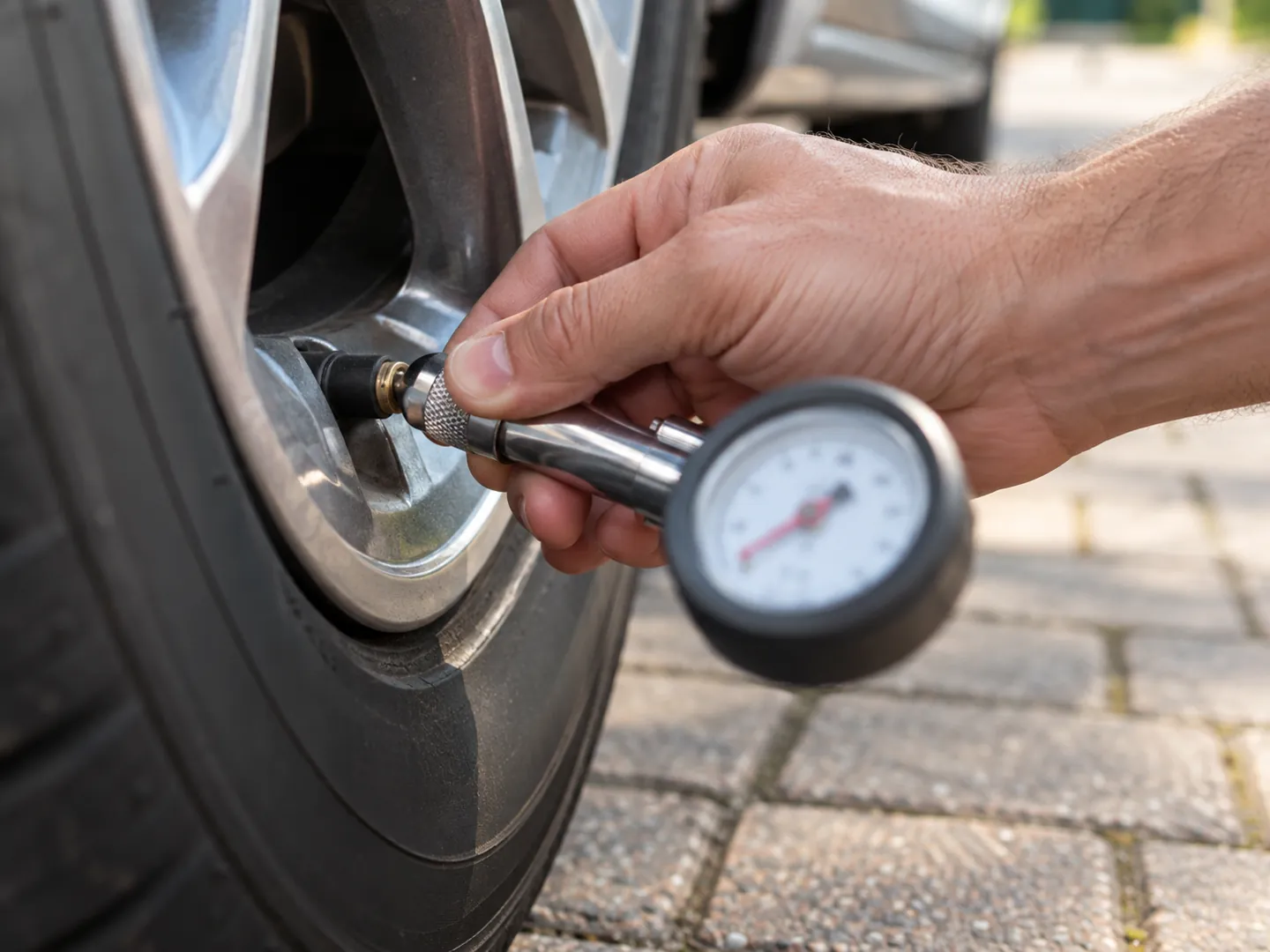
A hand pressing a tyre pressure gauge onto the valve of a car tyre on a dry driveway
AI-generated image, not a photograph of a real person or place.

FOUR HABITS FOR DRIVERS

Catch it early,
not at the test.

Warning lamps are easiest to deal with when you notice them early. These habits come from the Highway Code and the MOT manual.

  1. Watch the start-up checkLamps should light with the ignition and go out once the engine starts, apart from the handbrake light.
  2. Learn your symbolsThe Highway Code says to understand every warning display. The owner's handbook explains each lamp on your car.
  3. Do not wait for the MOTIf a lamp stays on or comes on while driving, stop and investigate. A charge light may mean the battery is not charging.
  4. Check tyre pressures yourselfTyres must be inflated to the manufacturer's figure for the load. A TPMS lamp is a prompt, not a replacement for checking.

HOW MOT RESULTS WORK

Dangerous, major,
minor, advisory.

The DVSA grades every defect. A dangerous defect is a direct and immediate risk to road safety: do not drive until it is repaired. A major defect may affect safety or the environment and should be repaired immediately. Both mean a fail.

A minor defect has no significant effect on safety and should be repaired as soon as possible; an advisory could become more serious and should be monitored. Dashboard messages are not defects on their own, but help a tester confirm a lamp is showing a fault.

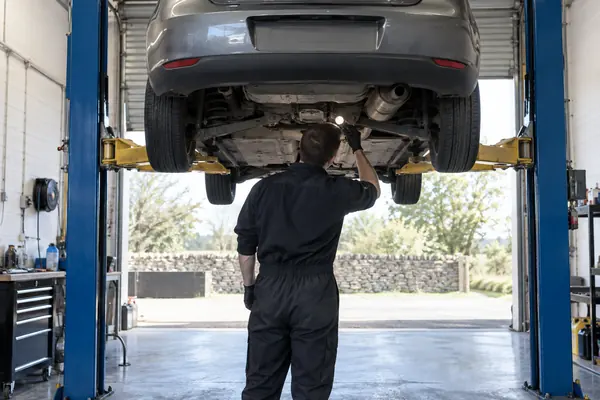
A car raised on a lift in a clean garage test bay, a technician seen from behind inspecting the underside
AI-generated image, not a photograph of a real person or place.

QUESTIONS PEOPLE ASK

Frequently asked

Will my car fail its MOT if the engine light is on?

Yes, if it applies to your vehicle. The DVSA manual lists an engine MIL that is inoperative or indicating a malfunction as a major defect for petrol cars first used from 1 July 2003 and diesels first used from 1 July 2008.

Which warning lights fail an MOT?

The manual lists warning lamps showing a malfunction for the engine, ABS, airbags (SRS), electronic stability control, electric power steering, electronic parking brake and tyre pressure monitoring (cars from 2012) as major defects.

Is it normal for lights to come on when I start the car?

Yes. The Highway Code says warning lights light up when you turn the ignition and go out when the engine starts, except the handbrake warning light. If they stay on, stop and investigate.

Does a passenger airbag off light fail the MOT?

No. The manual says a lamp lit to show that the passenger airbag is disabled is not a defect. Only an SRS lamp indicating a system malfunction fails.

Does a warning message on the screen fail the MOT?

Not on its own. The DVSA manual says dashboard warning messages are not a defect in their own right, but they can help the tester confirm that a warning lamp is lit because a malfunction exists.

SOURCES

Where the facts come from

Each figure on this page comes from the sources below. Check them for the full detail and context.

  1. The Highway Code (GOV.UK): Annex 6, vehicle maintenance, safety and security
  2. DVSA MOT inspection manual: 8. Nuisance (engine MIL)
  3. DVSA MOT inspection manual: 1. Brakes (ABS and brake fluid warnings)
  4. DVSA MOT inspection manual: 7. Other equipment (airbag SRS and ESC)
  5. DVSA MOT inspection manual: 5. Axles, wheels, tyres and suspension (TPMS)
  6. GOV.UK: MOT rule changes, 20 May 2018